

The Thinking Woman's Fall

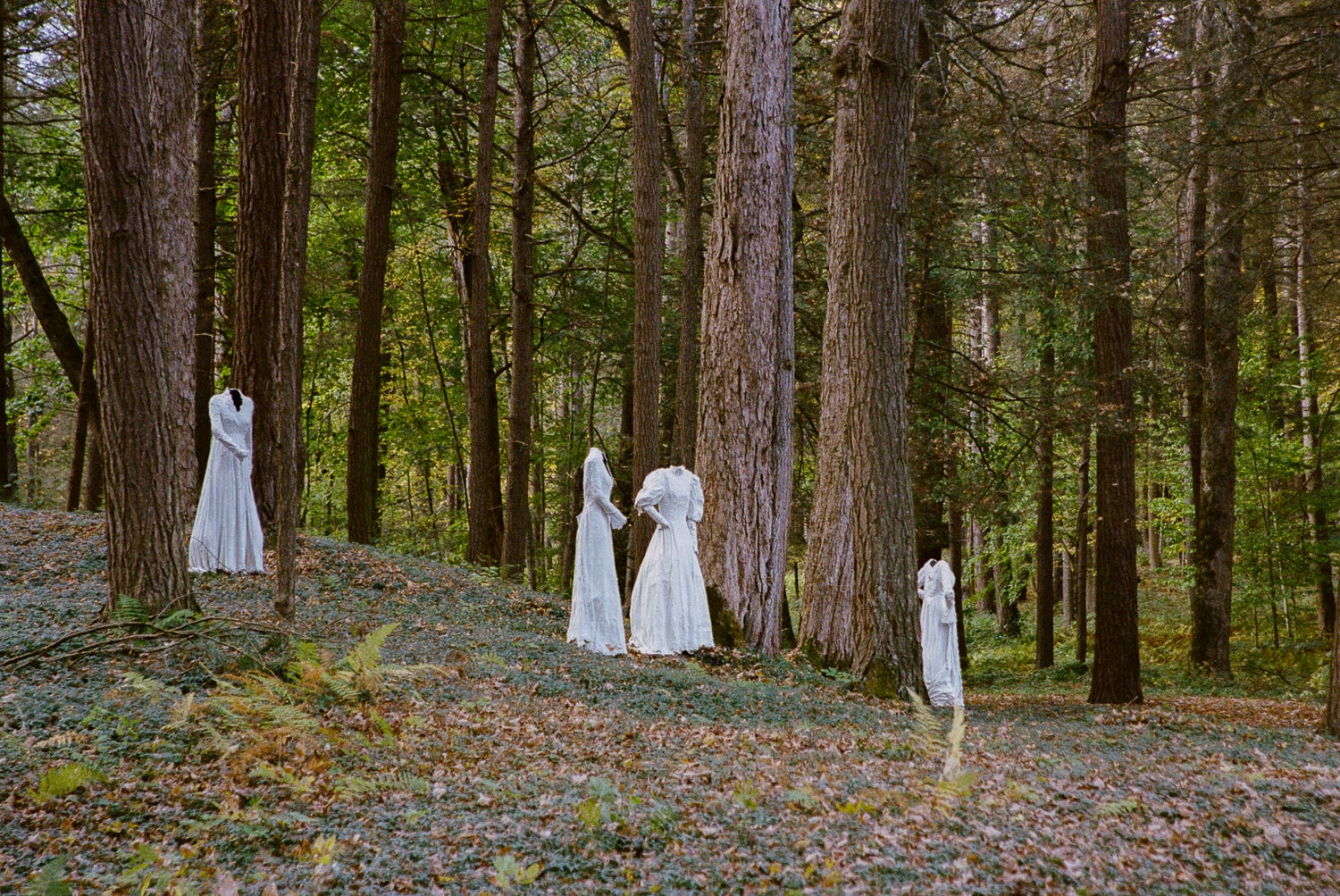
Fall sharpens thought, my mind wants a desk, a coat, a heavy enamel pen. It’s the season when my curiosity starts to feel like a hunger, when I crave texture, evidence, conversation, rigor.
The Thinking Woman’s Fall is a map of places to address that appetite; temples of attention scattered through New York and beyond. Each one invites a different kind of study, of words, objects, taste, care.
You could read it as a travel guide, or an essay about staying in love with thinking itself. It is my permanent dragon to slay, this season and every. I find that romantic.
Begin anywhere, but I like to start in motion: driving towards New Haven with the windows rolled up, the first cold air of the year, this playlist is for you.
STUDY UP
Beinecke Rare Book & Manuscript Library
Yale University, New Haven, CT
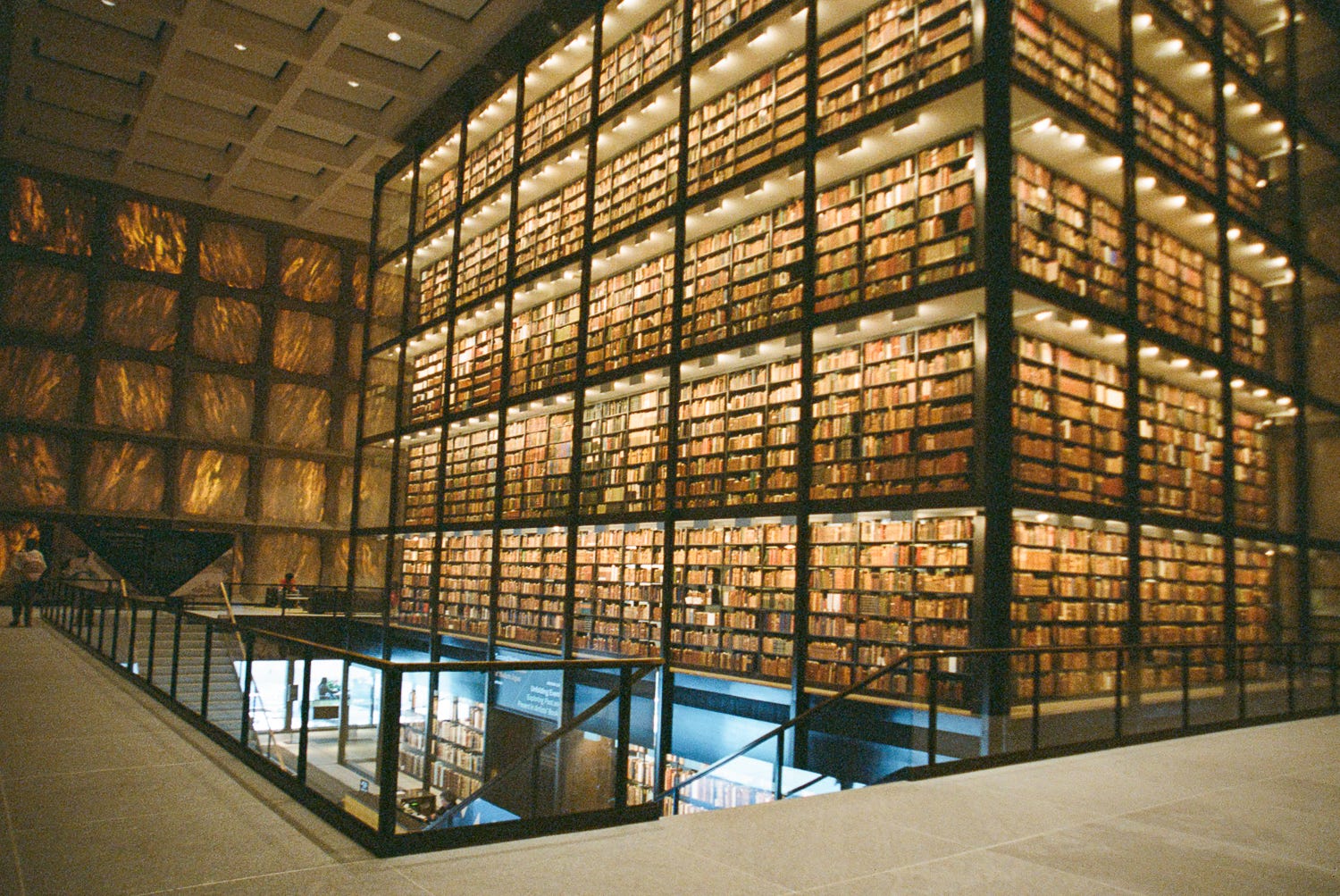
In the age of instant everything, when knowledge arrives unbid and vanishes within the next scroll, the Beinecke endures as a kind of miracle, our new Library of Alexandria. It’s a repository for what cannot be replicated, a monument to the beautiful inefficiency of seeking something by hand. They built a temple for the books, for contemplation and curiosity, and by extension, for all who still go looking.
Amid Yale’s predominantly Hogwartsian architecture, The Beinecke’s Brutalist hive box with its honeycomb marble frames cuts a harder line against the sky than the Corinthian tangle or filigree curtain of spires and crenellations. Inside you discover a six-story glass tower that holds the books in suspension, visible but sealed, a cube within a cube. The light is beautiful, amber, like a trapped moth or the glowing ember of a lantern. I wanted to lay jasmine flowers on the altar. I wanted to light incense. I wanted to study.
When I went, I was aware that only students or researchers could access the library, but was interested primarily in seeing the building. But it turns out that applying to be a registered, independent researcher involves way fewer questions than adopting a dog from a New York City-based rescue. And it was about $600 less, meaning free. They did want to know what my areas of research entailed, what my general interests were (though I could choose to share those or have them remain private), my address, email address, birthdate. Now it’s just a matter of carving out time to go back to New Haven.
In the meantime, the digital collections include Alfred Stieglitz’s autochromes, an archive of ketubahs, the Romanov family albums, early American maps, Edith Wharton’s correspondence, James Baldwin’s photographs and papers, manuscripts documenting the Cherokee language, Lesbian pulp novels, a Medieval model book for scribes, 616 photographic prints of American Indians assembled in 1876 by the U.S Geologic survey of the territories, courtroom sketches of the Black Panthers trial, a digital archive of the Tibetan-language newspaper, published from 1925 to 1963. When I am back on campus though (that’s what I’m calling the whole of New Haven), I will have access to the cube within the cube. What lies inside I have yet to find out, and it’s one of the most thrilling cases of “I can’t know what I don’t know” of my adult life. Next trip, I’ll know an important few more things; specifically, that I love New Haven clam pizza, and where one should get it. Only order clam pizza after your visit, though; nothing that requires fingers should come within days of handling the love letters of Gertrude Stein.
Leaving the marble quiet of the Beinecke, I wanted something smaller, more portable — a relic I could wear rather than study.
FIND YOUR TALISMAN
75 E Broadway #227, New York, NY
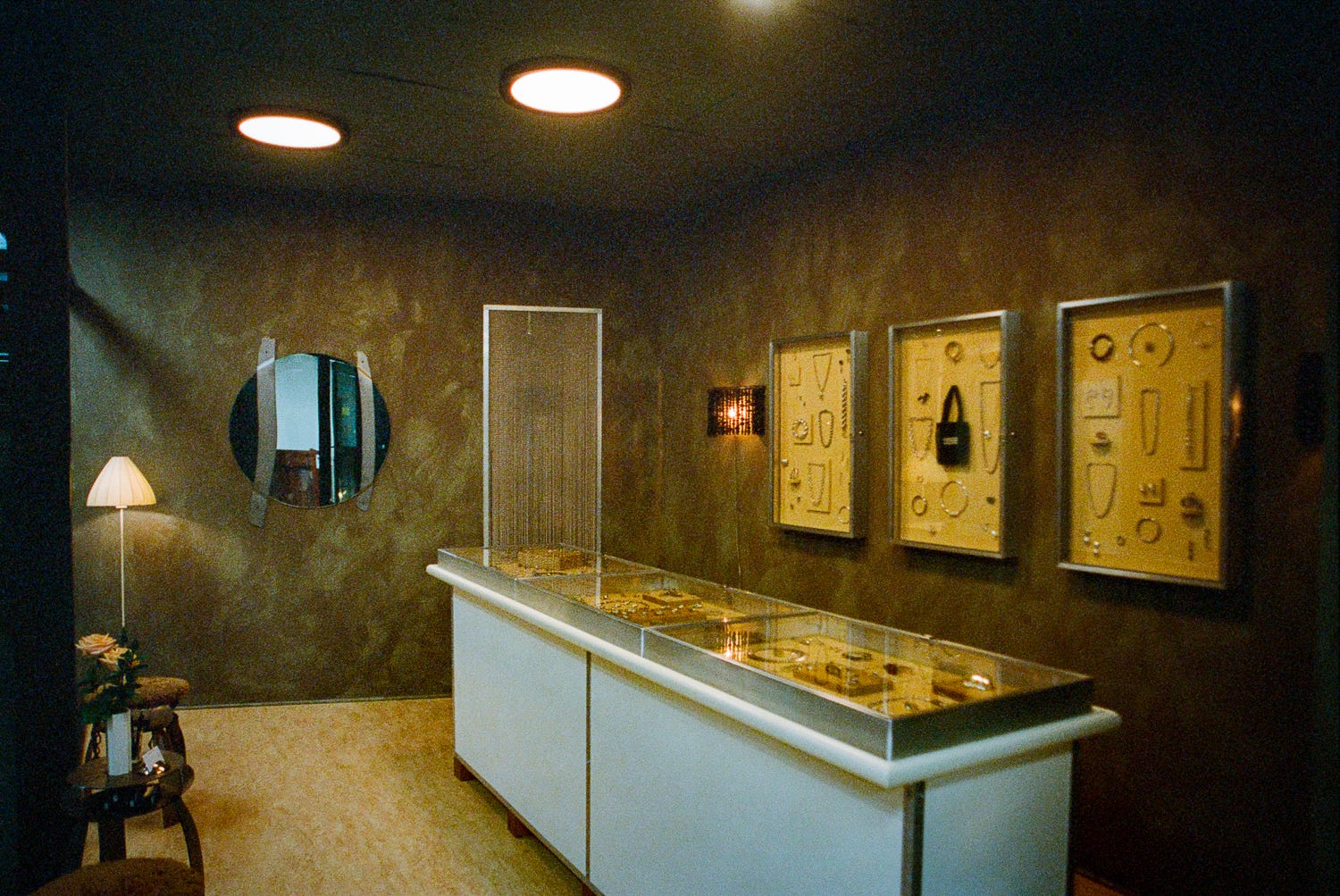
If Old Jewelry was a person, it’d be your bazaar-navigating, Concorde-riding, haute-mannered Great Aunt who had stories in lieu of children; if it was a book, it’d be a ship’s log.
The store is on the second floor of the Chinatown mall under the Manhattan bridge, and it is a kind of devastatingly chic treasure chest, a walk-in jewelry box, strangely reminiscent of the Beinecke’s glass tower of books. The walls inside are textured, brushed brown, a patina like an Oaxacan hacienda, and the main display case is about rib height, so you can peer down into it like a koi pond filled with precious, glittering things, Brutalist baubles, modernist medallions, malachite and sapphire, garnet and citrine, brooches and lockets, bone and gold.
Jewelry is inherently romantic, it’s an urge to adorn, to delight, to heighten what it means to have necks, and wrists and fingers. But I think that vintage or antique jewelry appeals to me more because it’s about wearing a character, donning someone else’s story and absorbing it into your own. It’s the same way autumn holds time, prompts reflection, retracing your footsteps through the circle of seasons, to find what was good, what can be brought forward into winter, what kind of amulet you’ll need to protect you in the future.
Then, from adornment to armor.
EDIT YOUR UNIFORM
34 Orchard Street, New York, NY
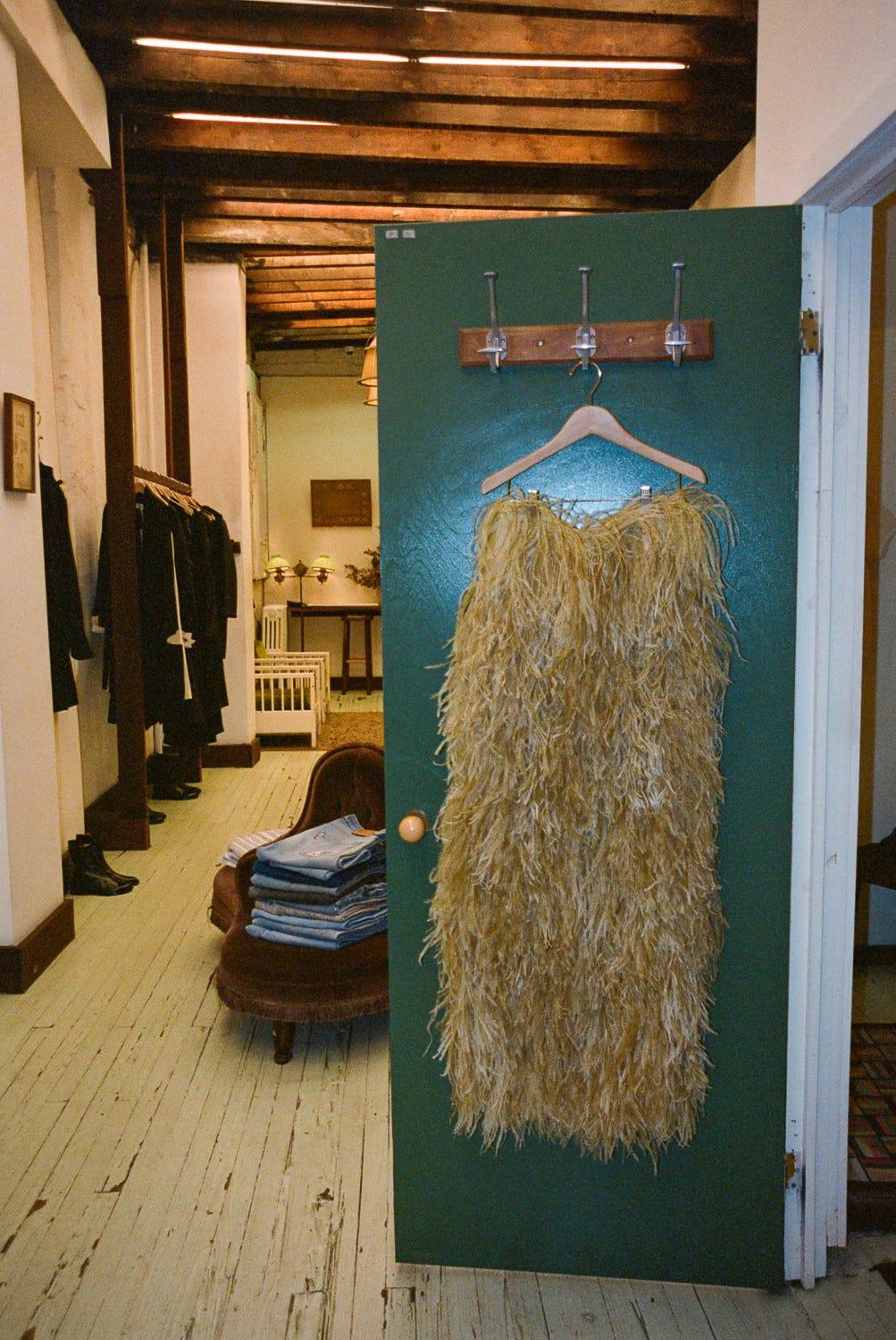
Desert Vintage has one of the most disciplined collections in the city, mostly in neutrals occasionally with a pop of oxblood or a sigh of celadon. On the racks: a Hermès silk jumpsuit from the Gaultier era, an Alaïa blazer cut pillowy and muscular, a Saint Laurent shearling coat, a Dior crimson cape that could walk itself down a runway. It’s the sort of inventory that makes you whimper at the prices — always three figures, mostly four, sometimes five — but then start doing the math. The cost per wear drops every time you reach for them, which, realistically, will be all the time. These are not “expensive clothes,” they’re serious tools. They become uniforms, signatures — a rejection of the tyranny of choice and a rigorous way of incorporating beauty into your day to day.
After touching fabrics that made me faint, I needed something nourishing, democratic..
FEED YOURSELF
FOOD
89 Canal Street New York, NY
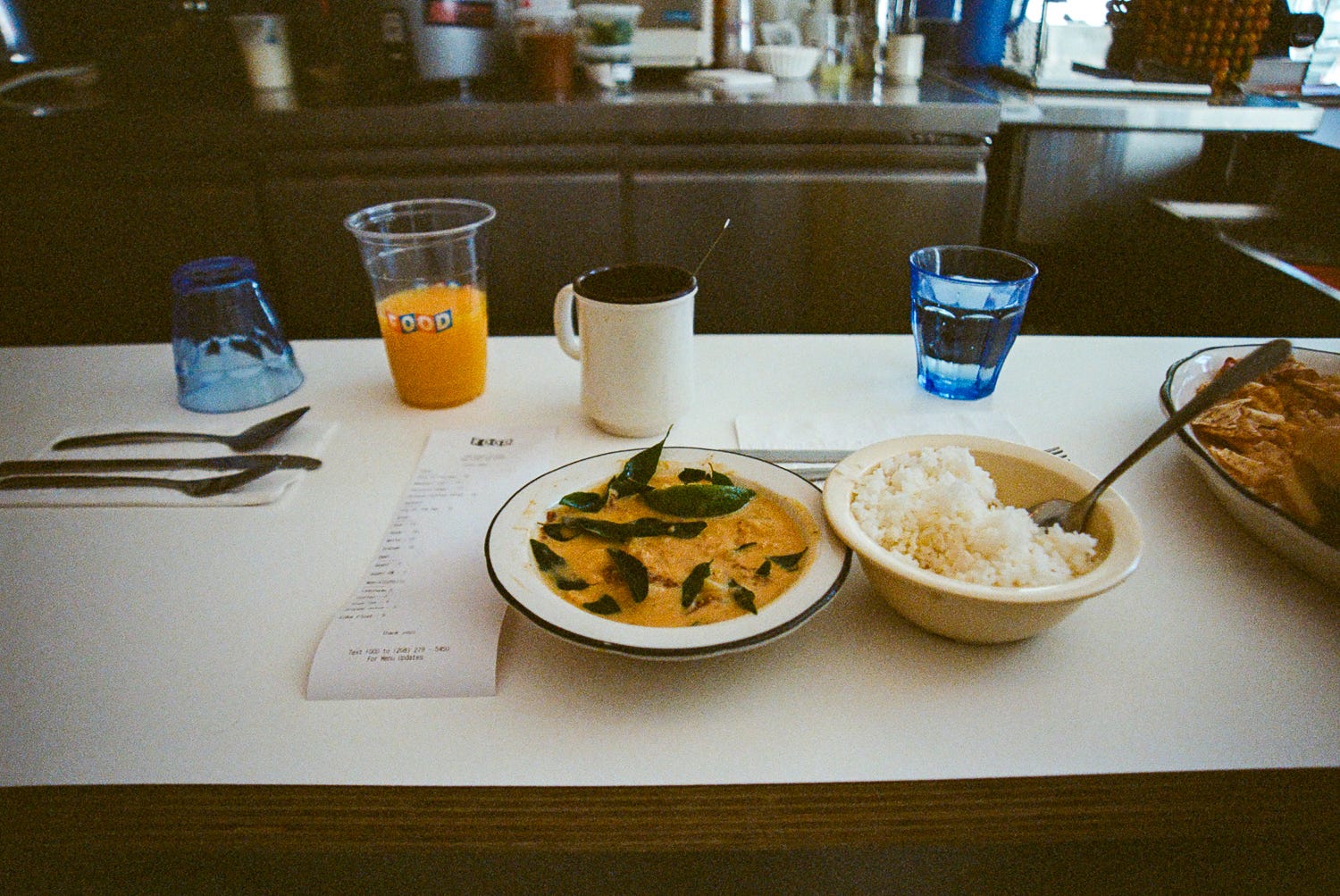
Stay with me here, I’m gonna try something out, FOOD reminds me of that oft quoted line from You’ve Got Mail: “Don’t you love New York in the fall? It makes me want to buy new school supplies. I would send you a bouquet of newly sharpened pencils if I knew your name and address.”
Like a pencil bouquet or an Ephron movie, FOOD is an act of generous, unnecessary, stubborn, swooning romance with the city itself. It’s a rebooted reimagining of the 1970s Gordon Matta Clark, Tina Girouard and Carol Goodden restaurant project by the same incredible name in Soho. The place runs on the logic of hangout cinema: nothing much happens, but everything matters. They’ve taken the bones of a classic luncheonette and punctuated it with pop-art objects (chunky, 8-bit mushroom pedestal stools in a big rock candy mountain palette) and utilitarian materials (plywood edging on the counters, vinyl checkerboard floors, exposed HVAC, slotwall). There’s a toaster oven and an air fryer, boxes of cereal, a Mr. Coffee with Cafe Du Monde cans on top, Petee’s Pie company boxes, a small television installed in the corner like a cobweb. I’m obsessed with the logo, in a love at first sight kind of way. FOOD, in its emblematic, ungoogleable glory, sits with each letter on an alternating colored block, brick red (not too warm) and sky blue (not too cool), zigzagging like an accordion pop up book.
#/media/File:Street_view_of_FOOD_(New_York_restaurant).jpg)
FOOD offers the communal, the homemade, the slightly uneven. One night I had boiled carrots in oil, garlic and lemon juice with flat leaf Italian parsley. It felt, and I mean this as a compliment, like a dish I’d eat at my Aunt Linda’s. I had cheese with ritz crackers, a few cups of coffee, a creamy mushroom stew over dry white rice; at lunch later, my boyfriend said his meatball sub was worse than Subway, and $19. The menu is printed on the thermal paper typically used for receipts, and it feels like some sort of metaphor, but I haven’t figured it out yet. Something between art being anything that makes you question what you thought you already knew and “my kid could make that.”
In a span of decades when most of the city’s third spaces have disappeared — priced out or sanitized, turned into Whole Foods or banks, FOOD exists like a memory, a set of 1970’s New York someone forgot to strike. That’s what places like this, and the people that create them despite the odds, do — they offer a way and a place to withstand indifference. You keep showing up, ordering the same thing, participating, because what else? Love is what makes it bearable, and that, more than anything, is why it survives.
LISTEN TILL YOU SEE
JANET CARDIFF, “HER LONG BLACK HAIR”
Central Park, New York, NY
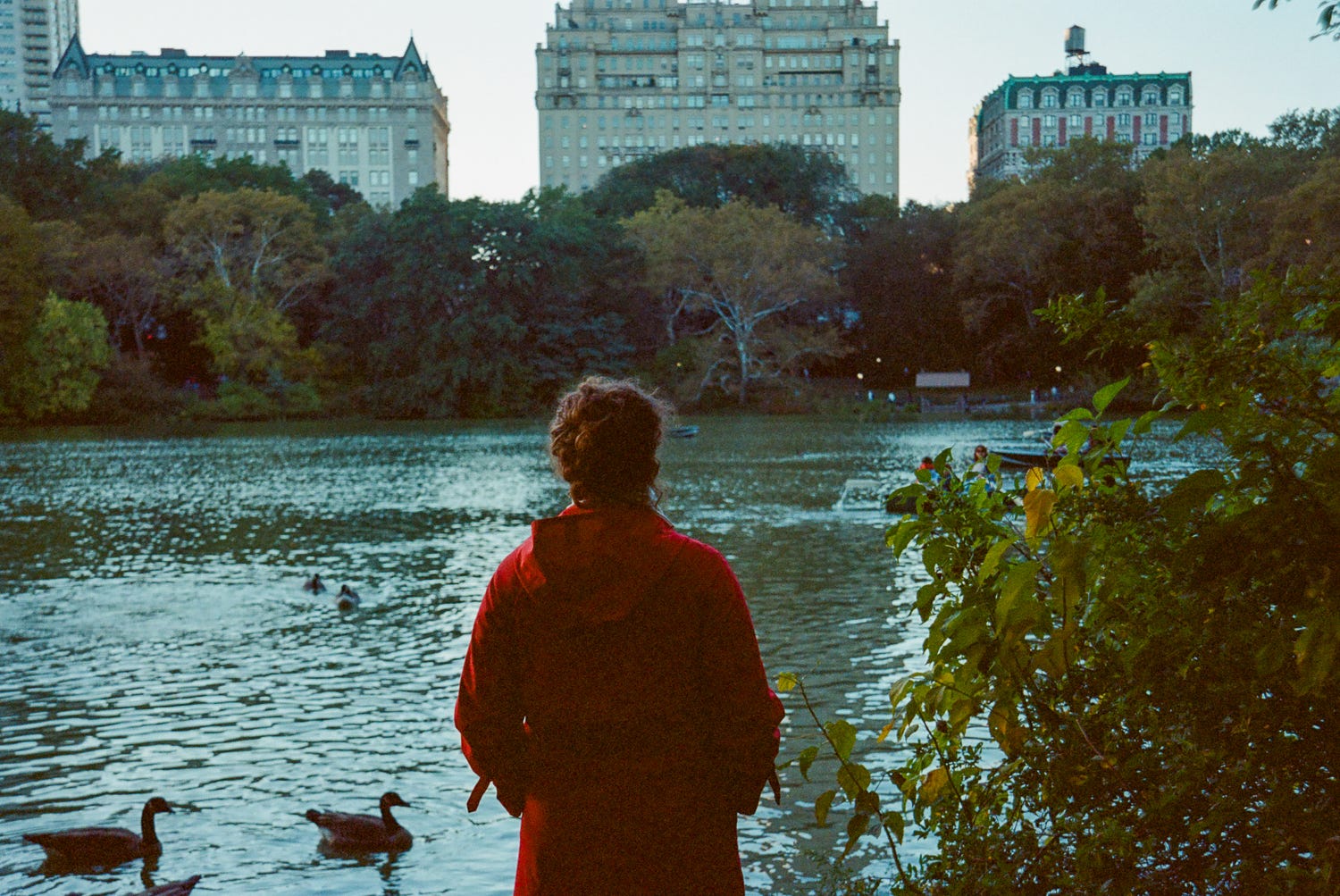
I heard about Janet Cardiff many years ago and I was struck by the idea of a walking audio guide that situates you in place, a cross between the little foam-earmuff-headphone tours you get in a museum and a fated playlist that somehow ends up matching your day. I always wanted to experience one of her pieces but I’m glad I waited till autumn to do “Her Long Black Hair” in Central Park, a rose by any other name, a ghost in any other season, etc.
I don’t want to spoil the piece for you. It is actually about being there, listening, watching, feeling the veil of someone watching you from the past. But, to help with the logistics of such a recommendation, I will say it begins at the bottom of Central Park, at the Equestrian Statue of Jose Marti, near the waiting corridor of horse-drawn carriages. (Everyone should email NYC Council Speaker about Ryder’s Law, we really shouldn’t have these anymore.) You start on a bench, looking at a photo, Cardiff’s voice instructing you on what to look at and do next, like a murmur from a wormhole. Why are some things always charged? Have they always been?
The precision of the piece is uncanny, remarkable, unlikely. The tiniest details end up making it work, how easy it is to follow, how matched one’s footsteps are to hers, how place becomes a time machine. I did it twice and the first time a number of her call-outs appeared in my walk, and the second time not as much; they were different experiences, in a way that only points to the richness of the piece, because I’d do it again, happy to let her scaffold my looking, my walking.
The first time I did the walk alone, and the second time I did it with my boyfriend. He had been teasing me about doing a “slutty Janet Cardiff photo,” as if one could assign that prefix, like slutty-nurse, slutty-house cat. I strenuously defended the chastity of Cardiff’s work, mostly because I feel so SERIOUS about the brilliance of this piece, and in keeping with the theme of “The Thinking Woman’s Fall,” it’s no secret that it can be very difficult to walk to the knife’s edge as a woman who is both a cerebral and corporeal being. But, reader: The walk is a bit horny.
The emotional temperature of “Her Long Black Hair” is really up to you, the day, the other actors in the piece (meaning everyone else in the world, or at least in Central Park), the quality of the light and the temperature. Go now, I’d imagine it’s leaf-peaking in the park.
TAKE DESSERT SERIOUSLY
1048 Fifth Avenue, New York, NY
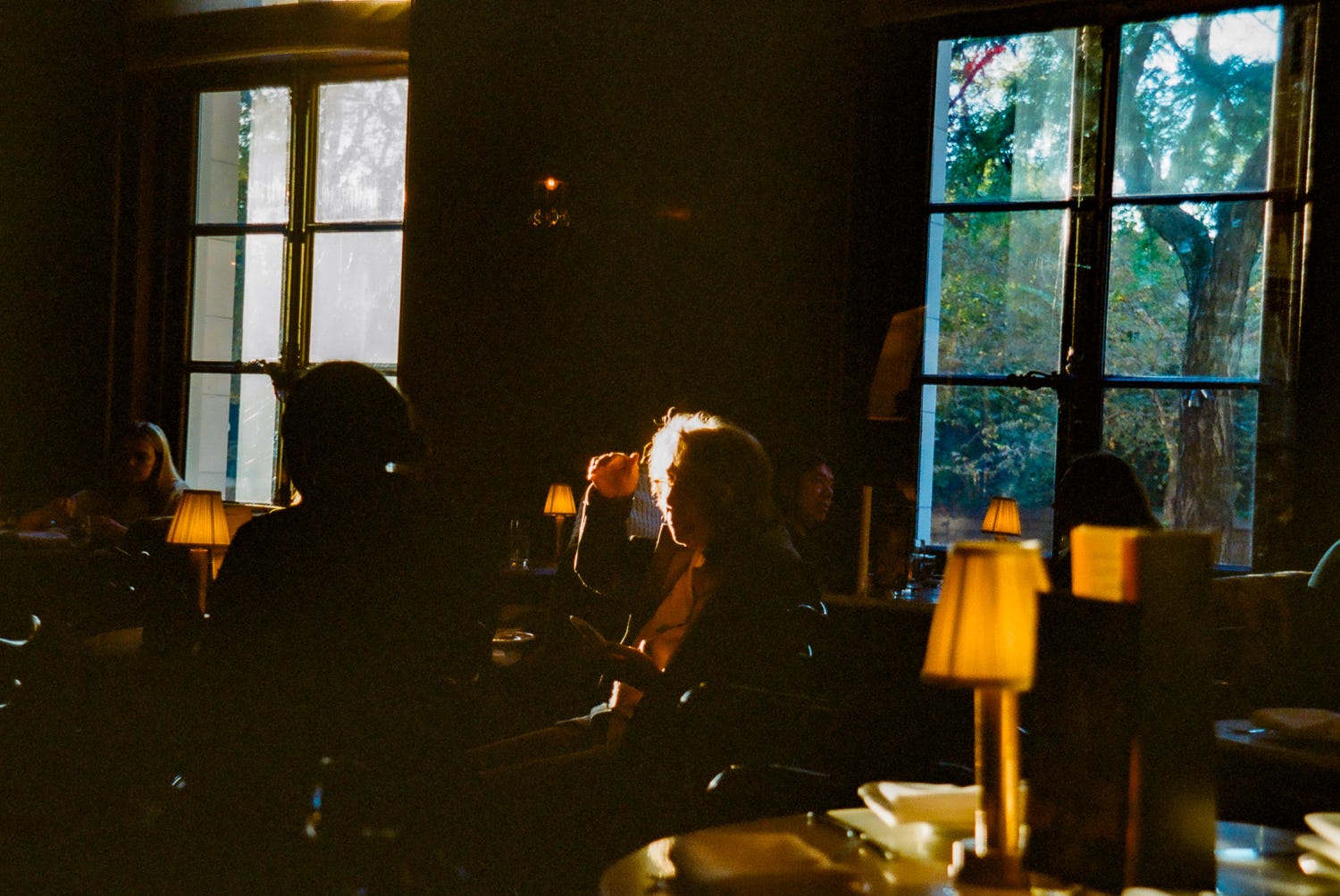
When the audio of “Her Long Black Hair” fades, you’re just past the Bow Bridge, a short walk through the Ramble brings you to the park’s edge where a Gilded Age Beaux Arts mansion now houses the Neue Galerie and Cafe Sabarsky. You need a dessert, a cup of coffee with whipped cream.
Inside the Neue Galerie, Café Sabarsky recreates fin-de-siècle Vienna; bentwood chairs by Adolf Loos, banquettes upholstered in Otto Wagner’s 1912 fabric, lighting by Josef Hoffmann, and dark mahogany paneling to pillow the sound of teaspoons and chatter. Come for the Sachertorte—dark chocolate and apricot sealed in a mirror glaze—or the Apfelstrudel, warm, with a pour of vanilla sauce. The coffee arrives on a silver tray beside a glass of water, perfect. You’ve bought yourself a half hour of white table clothed civility, a calm that belongs to another time.
When you leave Café Sabarsky, and step back onto Fifth Avenue, the city feels gentler for a few blocks. You might have a bag of books, or a small locket, a receipt curling in your pocket, a phrase looping and loping into a stanza in your head. The air smells like leaves and new shoes. You could call that knowledge, or something close enough.
This was one day, one way through. I’ve been mapping other days — different cities, different themes. If this guide worked for you, please follow along. There will be more.
Your writing is delectable! Like a soft chocolate chip cookie just out the oven.
yupppppppp