

All the Work That Keeps Us Warm
A Guide to Craft, Care and the Dark Months

Summer is so fucking easy; cut a tomato, put some salt on it — you’re a genius, life is wonderful. Winter requires skill, deliberation, cunning, craft. After crafting an elaborate feast with my cousins from daybreak to dusk yesterday, I can attest to how much coaxing a root vegetable needs, how many layers and generations of skill were required to take a potato from a stone in the dirt to fluff on my fork. When a small boat is referred to as a “craft” it’s because of its original implication of “might, power,” which is also how we get to witchcraft, spellcraft.
There’s an intuitive pleasure to living seasonally. November into December is nature’s cue: time to kindle enough light to keep going through a dark and darkening season. It is about the kind of work that makes us human, an enterprising creature who doesn’t just build a nest, but a fire, a radiator, a quilt for the bed. It’s about making the task of organization/preservation meaningful beyond its function. It’s raking the leaves, the work of a life.
I wanted to find the most beautiful — the most powerful — craft I could for you.
MAKE FEASTS
Joanne Hendricks, Cookbooks, 488 Greenwich St, New York, NY 10013
“I’m not a scholar of anything,” Joanne Hendricks told me, unconvincingly, moments after describing a treasured piece she regrets selling: an 1884 Percy Bysshe Shelley essay on vegetarianism she once found at the Shelley Society, just to the right of the Spanish Steps in Rome. As evidence of her professed lack of scholastic expertise, she cited her sister-in-law, “who knew absolutely everything,” a real scholar, she insisted, the kind of woman who could name the exact town where Shelley died. “Lerici” she added, a beat later.
“That thrilled me,” Joanne said, in her soft, whistling tea kettle voice. “And I’ve never been able to find another copy.”
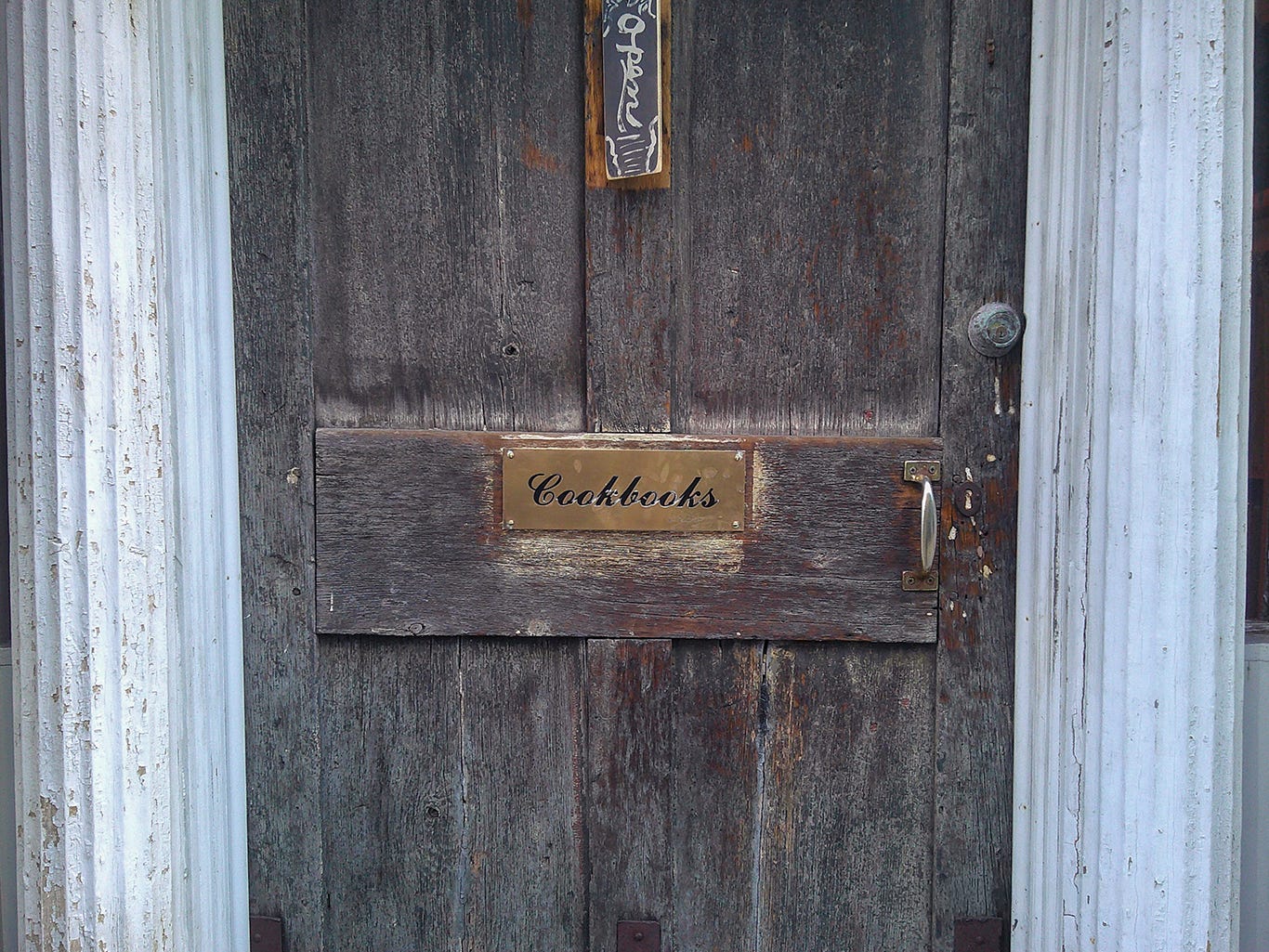
Joanne Hendricks, Cookbooks, is a perfect place. You’ll know it by its silvery, splintered door, weathered by a thousand seasons, and a small brass plaque where the mail slot might be, simply engraved: Cookbooks. It’s a portal into someone’s lifelong obsession.
Inside the townhouse where Joanne and her family have lived since the late ‘70s, the front parlor has been repurposed into a treasure trove of gastronomic history: cookbooks, cookware, engravings, dishes, oddities, ephemera, all manner of delights relating to food, eating and the pleasure of the senses. (There are enough gardening and flower books to illustrate this expanded worldview.) A centerfold from Andy Warhol’s illustrated cookbook Wild Raspberries hangs, framed on the wall. The whole room is as one would hope: giddy, romantic, creaking.
I knew I wanted a book, though they’re not cheap, and soon I was sitting on the floor, greedily surrounded by the volumes I’d pulled: M.F.K. Fisher’s novel with the perfect title I’m almost reluctant to share, Not Now But Now; The New Chinese-Kosher Cookbook; 365 Orange Recipes; Tiffany’s Table Manners for Teen-Agers (when did we stop spelling it like that?); an omelette book that begins “How I Came To Be An Omelette Maker”; The Potato Book; a 1973 Hampton Day School potato recipe anthology with a foreword by Truman Capote.
I left with an unusually sized Japanese Country Cookbook, published by Nitty Gritty Productions in 1969. The paper is textured like corrugated cardboard, ironed for supper. These details are the mark of things made differently, made for the joy of making, and for the delight of someone who’d notice.
Joanne is a living example of the craft of taste — a woman who has spent her life in the flow of curiosity, in pursuit of the undiscovered, in the protection of things worth preserving, and skills worth memorializing. Taste is often treated like little more than an inheritance or a personality trait, but in reality it’s a craft, a skill one has to hone through attention, revision, revisitation, and a devotion to getting something as ineffable as one’s own preferences just right, like a perfectly clarified broth.
DO IT YOURSELF
Nuthouse Hardware Store, 202 E 29th St, New York, NY 10016

I discovered Nuthouse fifteen years ago, when I’d just moved into an industrial loft on the river with thirty-foot black walls that slowly but then suddenly became oppressive at 2 a.m. Desperate, something had to change immediately. Certain that New York, city of insomnia and impulse, would provide, I was SHOCKED to learn it contains only one 24-hour hardware store, called Nuthouse.
Nuthouse was, at that time, presided over by the meanest woman in the world. Or maybe just in the city. Fran Lebowitz in a utility belt. She made sure to give me the absolute hardest time about my paint choices — a wide-eyed 23 year old with no firm opinions on finishes (now I know the answer is almost always eggshell), no grasp of drop cloth quantities or roller widths. Looking back, it’s strange, maybe magical, that she was there at 2 a.m. She even cut keys for me while I waited for the paint to shake. Had I needed lumber, I suspect she would’ve sawed it herself.
I returned on another night years later, when I lived in Greenpoint and realized what had been missing all along: a glittering, geranium pink kitchen. She was the one who supplied the word “geranium”; all I brought were some ideas about “birthday-cake pink.”
Even if you’re not inclined toward nocturnal home renovation spirals, just know there are fresh mops, potting soil and pothos, a Wonka-by way of-knockoff-Murano fluted ceiling fan, bangles of electric and washi and painters tape, bales of bubble wrap, tub stoppers, beach chairs, L-brackets, fuck it, most things are somewhere within its three stories of winding corridors.
In The Nature and Art of Workmanship, David Pye writes that craft depends on three qualities: judgement, dexterity and care. Comfortingly, he believes that care can account for more than judgment or dexterity, sometimes combined. Thank you, Nuthouse, for always being open, even in this sleepier, post-COVID city, for withholding judgement about my half-baked projects, my lack of dexterity and for offering care — however brusquely delivered — about what type of glitter goes well with “birthday-cake” pink paint.
BUILD A TREEHOUSE
Wharton Esherick Museum, 1520 Horseshoe Trail, Malvern, PA 19355
After visiting historic homes around the world, I’ve noticed a consistent pitfall: idiosyncratic spaces furnished with cheap period reproductions and wrapped in didactic panels, their texture erased — along with any sense of what it felt like to live there.
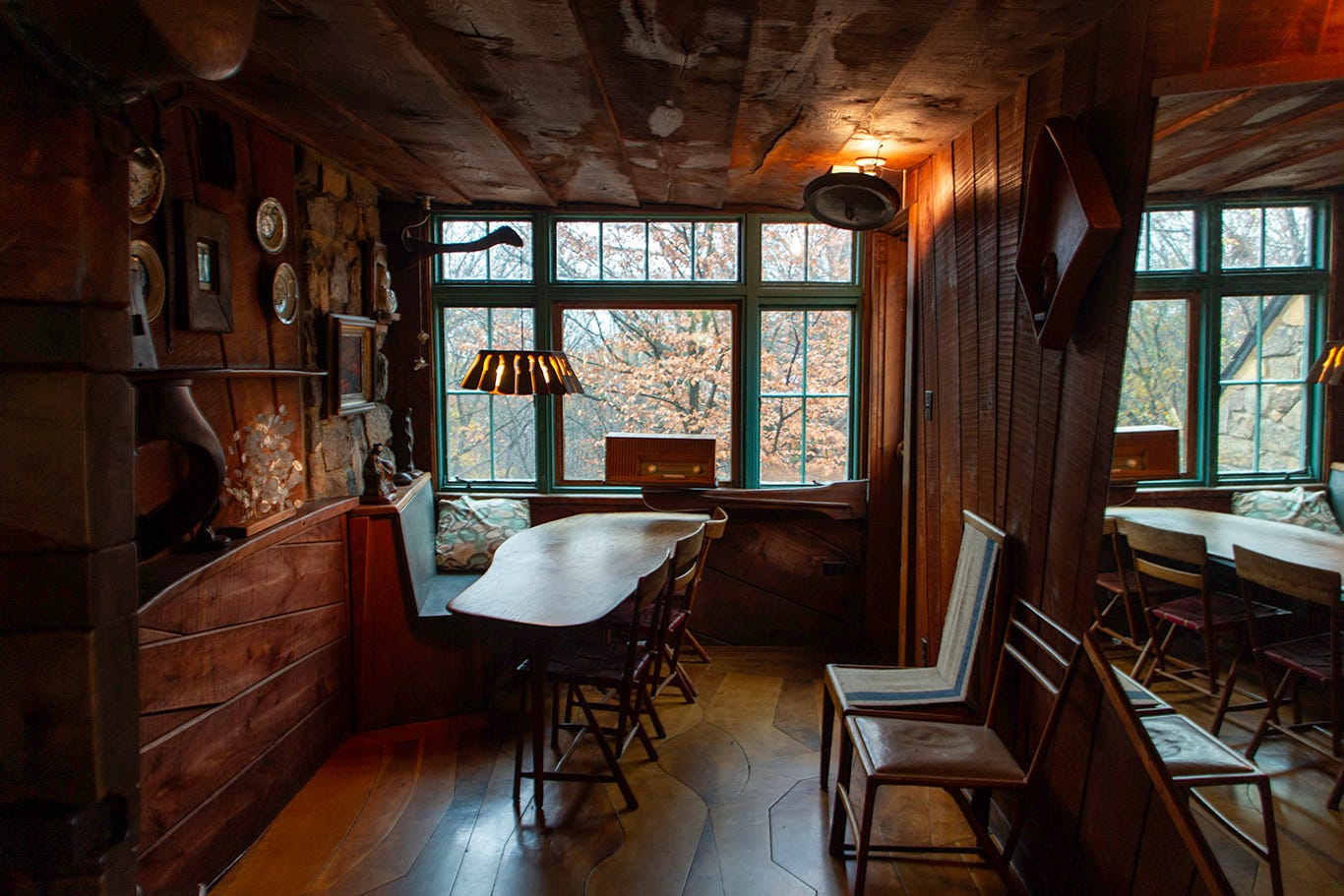
Wharton Esherick’s house in Malvern, Pennsylvania, “an autobiography in three dimensions,” couldn’t be more different. The museum (established in 1972) maintains the house exactly as he left it, and the drawers are filled with his pencils and erasers, his neatly folded shirts in the shallow drawers under his bed. It’s like entering his imagination while it’s still warm, like holding a hummingbird in your hands.
Esherick is the father of the American Studio Craft Movement — I learned about him from his music stand, dazzled and dumbstruck by how someone had coaxed such fluidity out of solidity. He trained as a fine art painter before he was a woodworker, and in the 1920s he spent his evenings at the avant-garde Hedgerow Theatre, sketching: the curve of a dancer’s spine, the sweep of an actor’s gesture, the bend of a bow caught from the balcony. Those drawings can be felt in direct continuum down to the grain and movement of his furniture, the body never left his work. I knew this academically, as a fan, from the remove of books. But once you see the house you truly understand.
It’s hard to explain the DELIGHT of the house. When you go to the second floor, there’s a beautiful piece of wood hanging, sweetly figural, like a monkey on a rope, and when you pull it, a trap door lowers to separate the bedroom from the studio. I gasped, and Katie Wynne, the Deputy Director of Operations and Public Engagement, who generously gave me a tour, looked at me and said, “Young at heart.”
There’s a pot lid as a lampshade. Cupboards open illuminated, using the same technology that refrigerators use to turn on the light. Little bits of genius are initialed with “W.E.” done in notchmarks, three for W, three for E, like flags in the wind. The floorboards are cut like a puzzle. It’s H.C. Westermann as Peter Pan to the Lost Boys. It’s as if the Martha Graham troop got stranded like Swiss Family Robinson. It’s the treehouse you could never build but only conjure, the bowerbird’s nest arranged ever just so.
It’s so good. It’s one of my favorite places I’ve ever been. Please go.
PRESERVE
Fong On Tofu Factory, 81 Division St, New York, NY 10002
For those who may have forgotten what tofu actually is, the process is simple and ancient: Soybeans are soaked and ground, the liquid that separates from the pulp becomes soymilk (the better the beans the better the milk), and that milk is either baked into tofu or coaxed into daufu fa, a tofu pudding that feels like baseline ambrosia; something you’d give to babies, someone sick or down bad, in need of gentleness. It’s a healing porridge, a proteinous Dole Whip, a gritless polenta, a fibrous cream.
Since 1933, one family has been making tofu, soy milk, and rice cakes in a stately, brick-faced building alongside the Manhattan Bridge. Paul Eng, the current owner of Fong On Tofu Factory, revived the business after a few fading, waning years, reconstructing recipes whose precise measurements had been lost, or maybe never recorded, by taste, memory, and care alone. He went to Taiwan with his brother, the only place he could find the proper tofu-making machinery with an English website. While there, they were encouraged to explore the toppings landscape, a new territory for Eng whose tofu had traditionally been served with nothing more than a little syrup. It takes an unbelievable amount of skill to make something that simple so marvelous, as a soybean is to tofu, so is red to a Rothko.
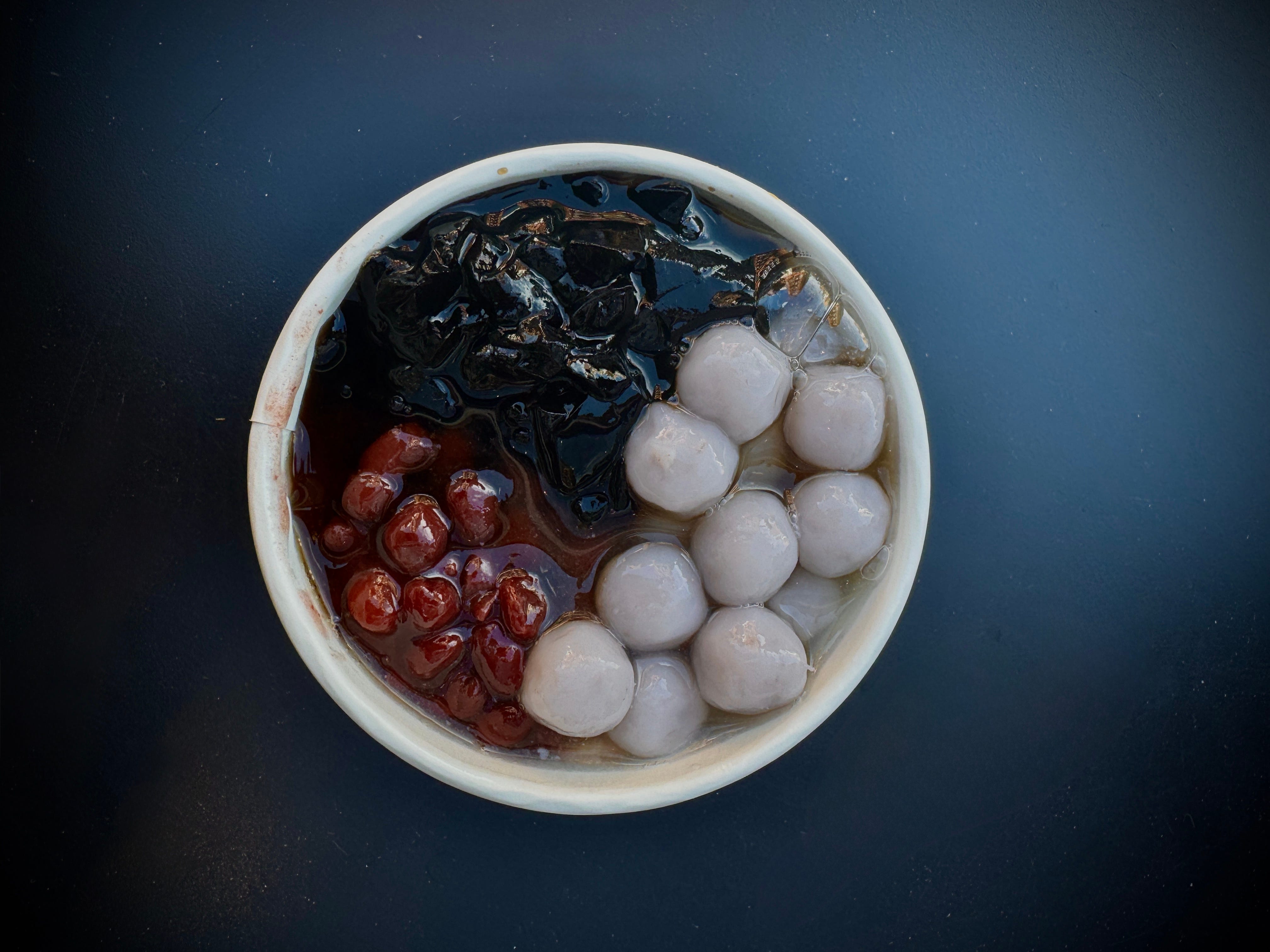
I went twice, somewhat accidentally. The first trip I tried the savory daufu fa: dried shrimp, pickled radish, fried shallots, scallions, sesame, chili oil. Delicious, perfect, nutritious, I felt jazzed with protein. I ran some errands, broke my camera, and felt a sudden need for exactly that creamy comfort again — this time with taro balls, grass jelly and sweet red beans.
I wish I were clever or expert enough to weave the broader, longer tapestry; from customized tofu pudding in a multigenerational Chinatown institution to Taiwanese topping culture, there probably is a thesis, obvious and profound, the way Ruby Tandoh, in my favorite chapter of her new book “All Consuming” about boba tea, writes, “The foods that are most free to move are the ones that anybody, with a bit of light training, can make.”
But for now it’s simply this, a cheap and delicious cup of history, reinvention and comfort. When I finished my second cup, I texted Mark, “I love tofu!” He responded, “Didn’t you before?” and I said, “Yeah, but more now.”
MEND YOUR SHADOW
Louise Bourgeois: Gathering Wool, Hauser & Wirth, 542 W 22nd St, New York, NY 10011
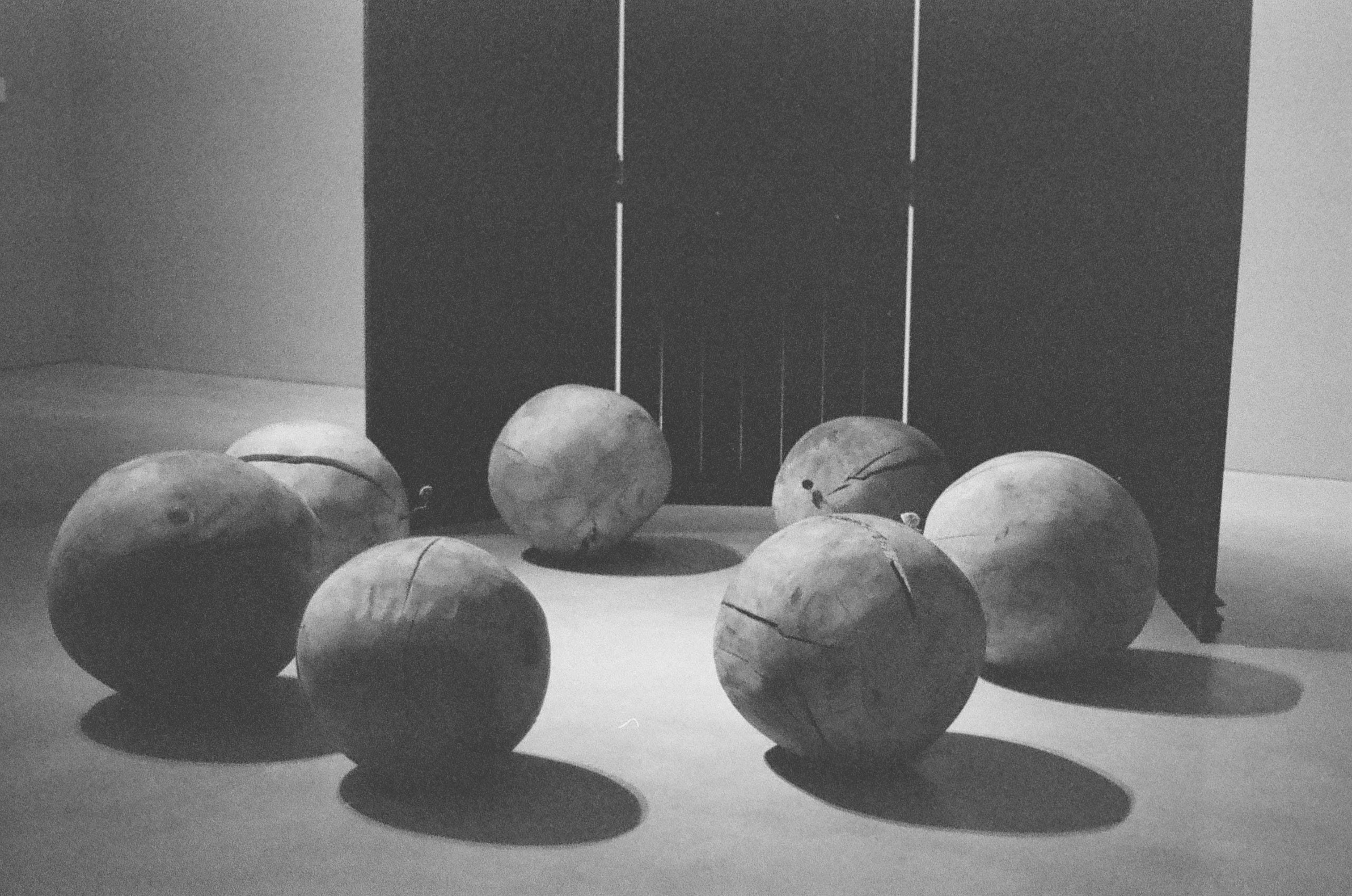
Not to bore you with all the behind-the-scenes stuff of me daydreaming up these itineraries but when I thought about Craft as my November North Star, I thought about the Shakers and Louise Bourgeois’ house at 347 West 20th St; for Halloween, I’d already been considering going as Louise in front of her stoop as her own Cosmic Walnut. Then in the past couple of weeks, the gallery Hauser & Wirth opened a show at their Los Angeles gallery about The Shakers and a show at their Chelsea location of Louise Bourgeois. I don’t know what it means, besides that we’re thematically, seasonally inclined towards these obsessives, fanatics, devotees, people of passion, in the fever of worship.
Bourgeois grew up in a family of tapestry restorers; from childhood she understood a business of literally repairing rupture. I don’t think it’s a coincidence that her work so often returns to fabric, and to spiders, the seamstress of the animal world. Her pattern was autobiography. She filed, sorted, mended, processed her emotional life through materials, collapsing the distinction between “art” and “craft” decades before it was fashionable, safe or uncomplicated for a woman to do so. Perhaps because of these high stakes, her craftsmanship was ferociously technical. Her marble works are exacting, her sewn pieces have the architecture of couture construction. She treated materials the way a pan-psychist might, or a Shinto, co-collaboratively, as if they were alive and carrying memory — like they had moods and wants of their own.
Go see the show. There’s a marble sphere with a baby arm protruding from it, like life popping from a cell, like childhood from a black hole. There’s a periscoping nightmare train, throbbing with red light and moving menacingly back and forth. There are googley eyes on a cabinet and shelves filled with glass jars, quiet and humming.
DO GOOD
Hancock Shaker Village, 34 Lebanon Mountain Rd., Hancock, MA 01237
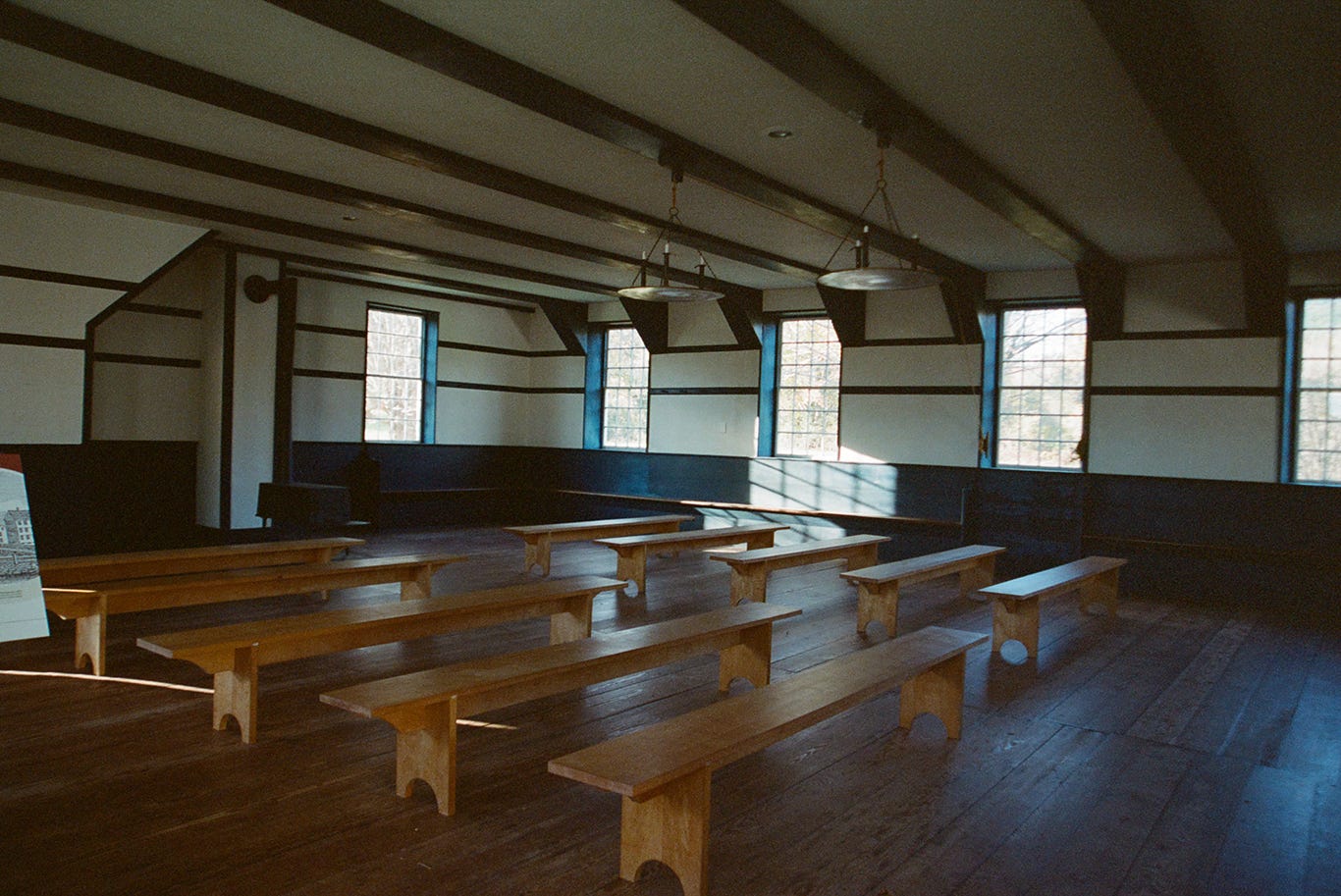
In anticipation of the Christmas release of The Testament of Ann Lee (starring a spirit-moved Amanda Seyfried) and, if you can summon further steel-cut-oats patience, the opening of downtown Chatham’s gigantic Shaker Museum in 2028 (18,000 pieces already online — make a cup of tea and just scroll through baskets, you’re welcome), it’s a good moment to reacquaint oneself with the Shakers. A worldview with no division between work and worship, an infusion of spirituality into the most quotidian and earthly acts:
“Do All The Good You Can.
In All The Ways You Can.
To All The People You Can.
In Every Place You Can.
At All The Times You Can.
As Long As You Can.”
Shaker theology pulls off a kind of magic trick, it reduces an entire ethos of how to live into something so simple that it endures centuries later, known to most people today primarily as…design. From that design came: the straight bottom broom, the round barn, seed packets, the circular saw, the no-kill mousetrap.
But design was never the point. Attention was. They believed care — focus, intention, clarity — was the foundational building block. If you devoted yourself to attention, everything else would follow: better tools, better procedures, better rooms, better lives. Most of us would probably create better things too, if we simply paid devoted attention to the task in front of us.
At their height, the Shakers numbered 20,000 across 20 settlements, populated by converts and adopted orphans called fledglings. Mandatory celibacy (their one ill-considered design flaw) eventually thinned their ranks to three. I visited the Pittsfield settlement, an easy, lovely trip into the Berkshires, but later learned you can stay overnight at the Kentucky settlement. A friend told me that upon his late arrival, he was brought to his room by candlelight; a brief visit to another century.
Shaker craft is so obvious it almost feels hard to write about: Neatness is a moral stance. Function drives form. Peg rails are placed around the room, for coats and hats, and the ladder-back chairs that must be lifted when it’s time to sweep. Built-in cabinets rise to the ceiling so no dust can gather out of reach. Their furniture and objects have a subtle system, each drawer, cabinet and closet is coded, and each object is engraved with the code for where it belongs. A place for everything, and everything in its place.
I’m moved by the way they conceived of “the World,” and the customers who traveled long distances to buy their goods. You were to strive for perfection in everything you made and did, not because the world demanded it, because it clearly didn’t and doesn’t, but because you demanded it. Because your integrity lived in the making, not the sale. The care you place into a task is something between you and the Spirit. Their legacy — their design and tools, rituals and rooms — is an afterglow of that devotion.
HANDS TO WORK
Art Students League, Open Figure Drawing Classes, 215 W 57th St, New York, NY 10019
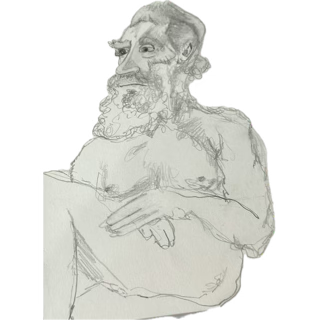
I need to get off my phone, and I’m positive you do too. There’s painting your nails so you don’t bite them, and then there’s sketching a nude model so you don’t scroll — a positively genteel form of self-restraint. Drawing hands, by the way, is impossibly hard, but a treat to have someone hold theirs still so you can try.
The Art Students League, founded in 1875 as an independent, artist-run alternative to traditional academies, has nonetheless trained an aspirational portion of American art history: Georgia O’Keeffe, Norman Rockwell, Louise Bourgeois, Romare Bearden, Helen Frankenthaler, Barnett Newman, Robert Rauschenberg. Seven days a week there are drop-in figure drawing classes with live models holding both short and long poses. I went to a Sunday class, the long session from 1:00 p.m. to 4:30 p.m., with twenty-minute poses that let you either shift your focus each round or sink deeper into one patch of details or contours. I treated each interval like its own TM session: a quick full-body sketch one round, then the face, then the impossible geography of hands, crossed legs, soles of feet. (Maybe meditation is the foundation of all craft, you have to be still enough to behold, to know how to proceed.)
The building helps: Its walls, stools, easels and tabletops are patinated with decades of smudge and scuff — a visible palimpsest of people practicing the soft risk of failing, returning, trying again. Everyone I encountered was unusually kind. Behind me, a woman, absolutely replete with supplies, fell asleep reading a book. Hands to work, heart to God.
I’ve come to believe everyone needs a hobby. Something that matters simply because you enjoy it. Ideally, something that demands hand-eye coordination and steers you into a headwind of a lineage you could spend years exploring. This could be many things; knitting, ukulele, bachata, calligraphy; though I am partial to the quiet particularities of figure drawing. It’s literally learning to see.
Everything is work, anything can be craft. Pick pleasure.
Or, as Wharton Esherick said: “If it’s not fun, it’s not worth doing.”
This was one day, one way through. I’ve been mapping other days — different cities, different themes. If this guide worked for you, please follow along. There will be more.
This piece is the new Turing test. This is quintessentially human. I wish I could write like this.
This was really very beautiful